The Power of the Corridor: Why Louisiana’s Ports Are Stronger Together
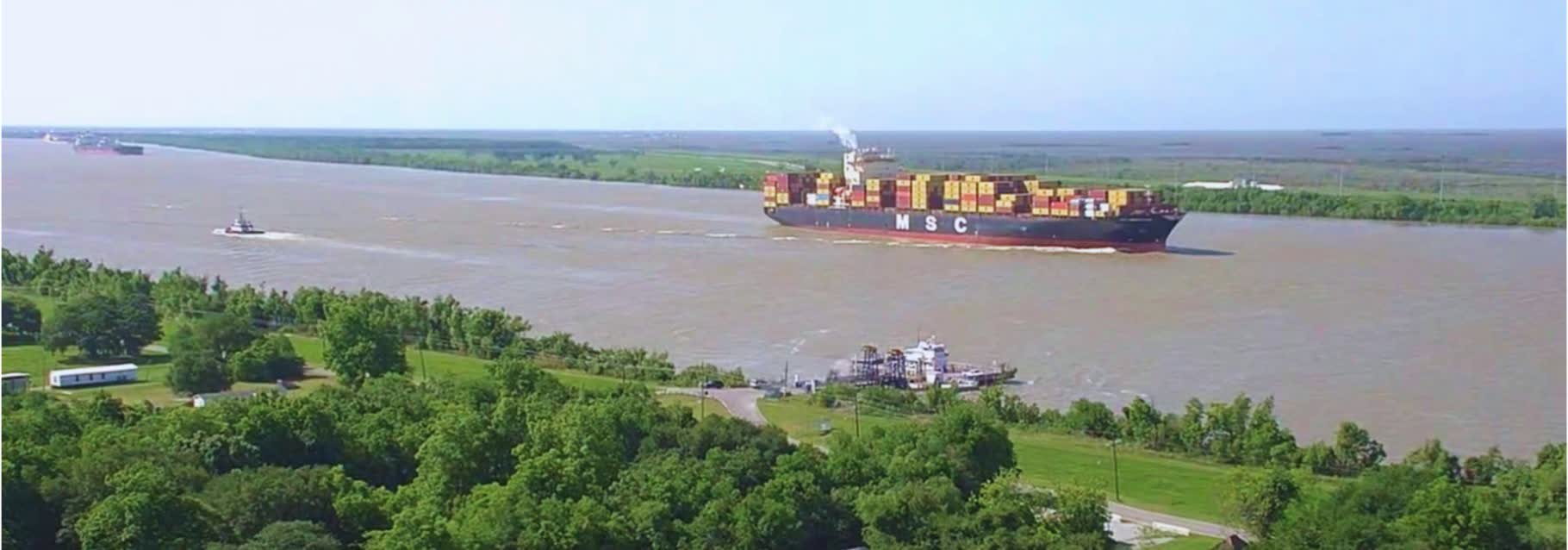
More than 17,000 vessels transit the Lower Mississippi River each year.
Think about that scale. Midwestern soybeans and wheat. Coal and cement. Petroleum, steel and LNG. Raw materials entering American industry, and finished products reaching global markets.
Every vessel has a commercial story, but they all share one river.
In my years working in the port industry, I’ve learned one thing: we must change how we talk about Louisiana’s infrastructure. We tend to define ourselves individually, talking about our terminals, cargoes and rankings. We draw jurisdictional lines on maps.
Those things matter, but they miss the bigger picture.
We already have the river. We already have the infrastructure. We already have the industrial base. We already have access to global markets.
Louisiana doesn’t have an asset problem. The opportunity is connecting those assets more strategically.
The River Is the Asset
Docks don’t create cargo. Cargo moves because a producer or consumer needs it transported. Our job is to make that movement safe, reliable and economically competitive.
The Mississippi River gives Louisiana an irreplaceable advantage, connecting America’s industrial and agricultural heartland to the world.
But geography alone isn’t enough.
A trade corridor requires deep water, marine terminals, rail, highways and pipelines. It requires tugs, pilots, stevedores and skilled labor. It demands the people, equipment and infrastructure necessary to move highly diverse cargoes efficiently.
That operational ecosystem is our real infrastructure.
The five deep-water ports on the Lower Mississippi—Greater Baton Rouge, South Louisiana, New Orleans, St. Bernard and Plaquemines—span 256 miles of river. Together, they handle hundreds of millions of tons of freight.
Port of Plaquemines is already one of the country’s major cargo gateways. We rank No. 13 nationally in total tonnage, including No. 2 in dry bulk and No. 2 in LNG.
Those rankings aren’t simply numbers. They demonstrate the scale of industrial activity already moving through this part of the Mississippi River.
Think Like a Customer
Shippers don’t care about parish lines. Global companies investing billions don’t care about jurisdictions.
They ask hard, operational questions: How fast can I reach deep water? What is my draft? What is my cost per ton? Where is the rail?
Customers experience supply chains, not maps.
Every Louisiana port must know its strengths, but we also need to understand how those strengths complement what our neighbors offer. Baton Rouge handles specific cargoes. New Orleans fits certain projects. Other ports along the river bring their own infrastructure, customers and specialized capabilities.
Port of Plaquemines has something very few ports in the country can replicate: location. We sit at the gateway to the Mississippi River, with deep-water access, no air-draft restrictions and direct connections to one of North America’s largest industrial corridors.
Each of Louisiana’s deep-water ports brings something different to the table. Those differences aren’t weaknesses. They’re what make the corridor powerful.
Cargo Behaves Differently
Generic cargo doesn’t exist.
Barging soybeans is not like loading LNG. Container terminals operate differently than coal export facilities. Steel coils demand different handling than liquid chemicals like caustic soda.
Every cargo dictates its own economics and equipment. No single port can be everything to everyone. Trying to do so undermines the specialization that makes a port competitive.
The Lower Mississippi’s strength is that all of these capabilities exist near each other.
Investors shouldn’t see isolated terminals. They should see a network.
Venture Global Shows What Corridor Economics Looks Like
Look at Venture Global’s Plaquemines LNG project, which turns U.S. natural gas into liquefied natural gas for markets around the world.
An LNG cargo leaving our port represents a much larger supply chain: pipelines, liquefaction, marine construction and engineering. It requires tugs, pilots, specialized services and thousands of workers.
In its first full year, Plaquemines LNG exported 16.4 million metric tons. Now, Venture Global is planning an $18 billion expansion.
That $18 billion doesn’t just build a terminal. Investment at that scale drives demand for fabrication, transportation, construction, engineering and professional services across Louisiana.
The facility sits in Plaquemines Parish, but the economic activity reaches far beyond our jurisdiction.
That is corridor economics.
Compete Later, Collaborate Now
Ports will always compete. We should. Competition drives innovation.
But we often compete too early.
Before Plaquemines competes with another Louisiana port for a project, our state may be competing against Texas, Alabama or another maritime region. If Louisiana isn’t on the shortlist, our internal rivalries don’t matter.
We can be commercial competitors and strategic partners.
The five deep-water ports are proving this through a unified marketing strategy. The goal isn’t to merge our ports or erase what makes each one different. It is to align our interests where alignment makes Louisiana more competitive.
Before we compete for the project, Louisiana must win the project.
Proximity Pays
Industrial clusters work. When ports, suppliers, customers and infrastructure concentrate, efficiencies compound.
At the Port of Plaquemines, our location at the mouth of the river gives us a specific role. Every deep-draft vessel entering or leaving the Lower Mississippi passes through our waters.
Whether carrying Midwestern corn, energy products, steel or other commodities, access through the lower river is part of the supply chain.
We are the gateway.
Our success is connected to what happens upriver, just as upriver commerce depends on safe, efficient access to and from the Gulf.
That is the operating reality of the Mississippi River: what happens in one part of the corridor affects the competitiveness of the whole.
Infrastructure Follows the Corridor
Ports cannot plan in a vacuum.
Channel depth dictates vessel loads. Rail capacity dictates terminal velocity. Highway congestion dictates truck turns. Bridge clearances dictate vessel access.
These are corridor issues.
The goal isn’t simply loading more soybeans, steel or LNG at one dock. It is reducing friction across the entire system.
Delay is cost. Cargo follows economics, and economics require efficiency.
That means infrastructure decisions should reflect how freight actually moves. Channels, highways, rail, bridges and terminals are not independent assets. They are pieces of the same supply chain.
When we plan them that way, the entire corridor becomes more competitive.
One Voice Does Not Mean One Port
Louisiana’s ports must keep their identities.
South Louisiana, Baton Rouge, New Orleans, St. Bernard and Plaquemines all have distinct roles. At Port of Plaquemines, we will continue developing the advantages that make our 81 miles of river unique.
But one voice doesn’t mean one port. It means knowing when the mission is bigger than the organization.
When we pitch to international markets, we should talk about our individual terminals, capabilities and opportunities. But we also need to step back and show investors the system behind them.
The grain. The energy. The petrochemicals. The rail and highways. The industrial land. The maritime workforce.
We have the deep water. We have the industrial capacity. We have the maritime expertise.
The opportunity is connecting them.
The Power of the Corridor
The industry will evolve. Ships will change. Technology will change. Cargo markets will change.
Geography will not.
Louisiana sits where one of the world’s great river systems meets global trade. Thousands of vessels transit these waters, connecting American agriculture, energy and industry with markets around the world.
Those vessels do not experience five disconnected ports. They experience a corridor.
The river connects us physically. Supply chains connect us economically. Our customers increasingly evaluate us regionally.
Our strategy should reflect that reality. Coordination doesn’t weaken our ports. It connects our strengths. That is the power of the corridor—and how Louisiana competes more effectively for the next generation of cargo, industry and investment.