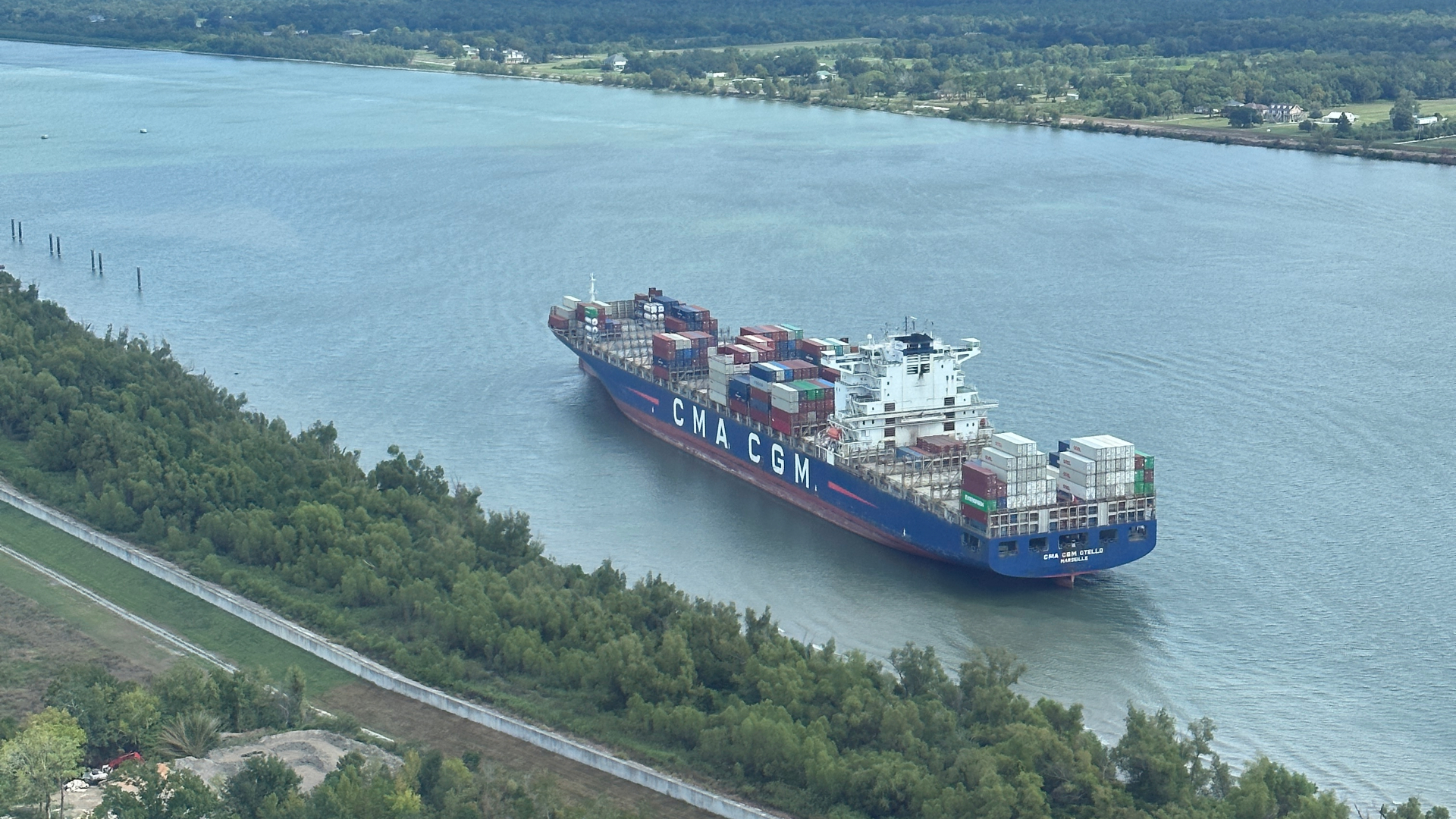
Louisiana Gateway Port is located along the lower Mississippi River, providing direct vessel and barge access into the U.S. inland waterway network. Through this system, cargo moving through the Port can reach inland destinations across more than 30 states by navigating connected river corridors that extend north, east, and west from the Mississippi River.
This reach is made possible by established inland routes linking the Mississippi River to major tributary systems, including the Ohio, Illinois, Arkansas, and Tennessee rivers. These connections allow cargo to move efficiently between Gulf Coast shipping lanes and inland industrial, agricultural, and manufacturing regions.
River access supports:
Long-distance cargo movement using barge and river vessel transportation
Cost-efficient logistics for bulk, breakbulk, and project cargo
Direct integration with the national inland waterway freight system
Rather than relying solely on coastal transport, the Port’s river access enables freight to move deep into the continental United States using proven inland navigation routes.
Louisiana Gateway Port is a rail-served port district with access to the national Class I rail network through service connections provided by Union Pacific. This connectivity supports the efficient movement of industrial, bulk, and breakbulk cargo between waterside facilities and inland markets across the United States.
As a Class I railroad, Union Pacific provides long-haul freight rail connectivity linking the Port to major domestic trade corridors. Through this network, rail service from the port district supports access to key markets, including:
Texas and Gulf Coast industrial regions
Midwest manufacturing and distribution centers
Central U.S. agricultural and energy markets
Western and southwestern freight corridors
Rail access enables cargo to move beyond the Mississippi River corridor and into high-volume inland markets using established national rail infrastructure.
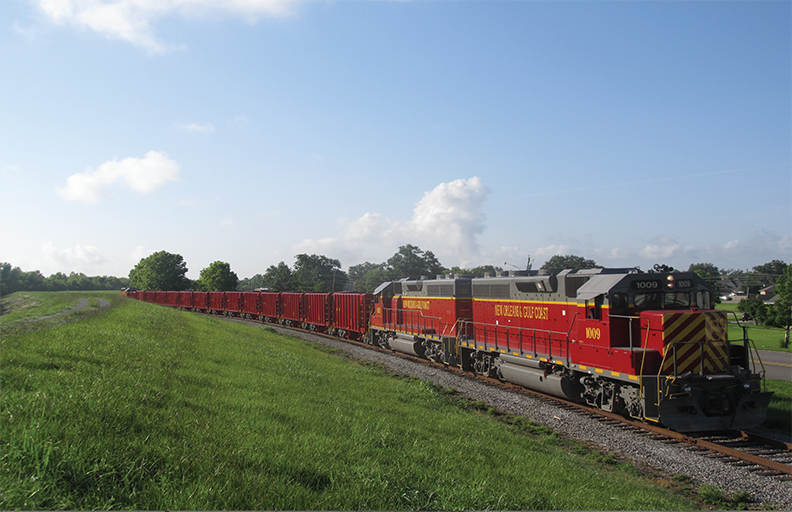
To strengthen rail functionality within the port district, Louisiana Gateway Port is advancing targeted infrastructure improvements that support safe, efficient rail operations and better coordination with surrounding transportation systems. Projects such as the Peters Road Rail Bypass are intended to improve rail circulation, reduce conflicts with local traffic, and support long-term freight movement and industrial development.
Rail connectivity remains a foundational element of the Port’s intermodal framework, supporting current operations while positioning the district for future infrastructure expansion.
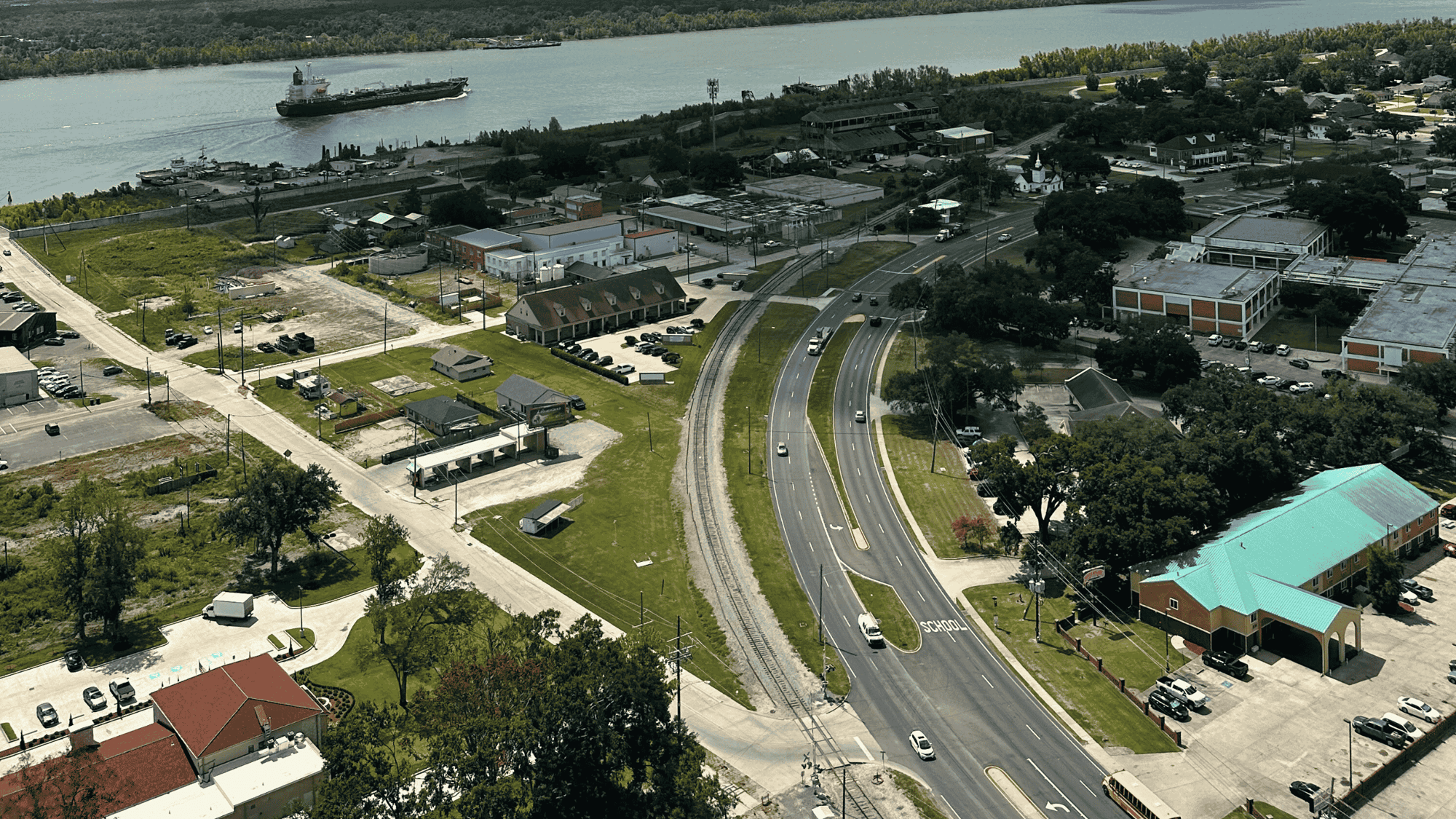
Louisiana Gateway Port connects directly to Louisiana Highway 23, which provides northbound access to the New Orleans metropolitan area and regional connections to Interstate 10. Highway 23 serves as the primary north–south roadway corridor for Plaquemines Parish, supporting truck access between port facilities and regional transportation networks.
Interstate 10 functions as a major east–west freight corridor spanning eight states, linking the Gulf Coast to key logistics, manufacturing, and distribution markets across the southern United States.
Through regional connections to I-10, port-related truck traffic can access major hubs and corridors, including:
New Orleans and Baton Rouge, Louisiana
Houston and the Texas Gulf Coast
Mobile, Alabama
Northern Florida distribution centers
Western U.S. freight corridors via interstate connections
This highway connectivity supports first- and last-mile trucking, regional distribution, and coordination with rail-served and river-accessible facilities within the port district.
Ongoing roadway and access improvements are intended to enhance traffic flow, improve safety, and better integrate truck movements with rail and industrial operations, supporting efficient freight movement while minimizing impacts on surrounding communities.

Explore the Port Blog for insights on intermodal connectivity, infrastructure projects, and port development.

We’re home to multiple major terminals serving a wide variety of sectors.