Automated translation provided by Google. For official translations of vital documents, please contact info@gatewayport.com.
Louisiana Gateway Port controls 81 continuous miles of the Mississippi River — making it one of the largest port jurisdictions in Louisiana by riverfront length.
• No bridges. No air-draft restrictions.
• 50-foot minimum channel depth and 750-foot width
• 14 major anchorages and direct access to the Gulf of Mexico
• Multi-modal connectivity: rail, highway, barge, and deep-sea shipping
The Louisiana Gateway Port is defined as the second-largest port in Louisiana by linear jurisdictional mileage along the Mississippi River. It encompasses the first 81 miles of the river from the Gulf of Mexico inland. This extensive territory allows the port authority to control the critical "first mile" of North American deep-draft trade, offering a 50-foot deep authorized channel and unrestricted air draft that enables larger vessels to move more predictably and efficiently than those transiting to upriver facilities.
+ M
tons of cargo moved annually
$6.5+ B
in economic output
30,000+
jobs supported statewide
As of 2023, Louisiana Gateway Port ranked #13 among all U.S. ports, handling 50.5 million tons of cargo1. This places LGP ahead of many long-established ports and reflects rapid growth fueled by industrial investment and infrastructure expansion. With major projects underway, tonnage throughput is expected to increase significantly in the years ahead. Our 81-mile jurisdiction and billions in active investment position us for future growth in total throughput.
Sources: 1. U.S. Army Corps of Engineers and Bureau of Transportation Statistics data
| Metric | Region | Statewide (Louisiana) |
| Total Capital Spending | $17.2B | $18.3B |
| New Business Sales | $17.2B | $18.3B |
| New Household Earnings | $5.3B | $6.0B |
| Avg. Annual Jobs Supported | 24,918 | 27,741 |
| Local & State Tax Revenue | $606.8M (local) | $419.7M (state) |
In addition to its river access, Louisiana Gateway Port makes it easy to move goods in and out by barge, train, or truck from a single location. These options allow cargo to move seamlessly. With multimodal connections, goods can reach their destination faster and more efficiently, helping businesses cut down on delays and shipping costs.
The Port is also gearing up for a major expansion, with construction on a new container terminal set to begin in 2027. The first phase will cover 200 acres and include on-dock rail service, deepwater berths, and modern cargo-handling infrastructure. As demand increases, the site is designed to expand up to 900 acres, creating capacity for millions of containers per year. With this new investment, Louisiana Gateway Port is projected to become the fifth-largest U.S. port by tonnage within the next five years.
| Commodity | Volume |
| Coal & Lignite | ~11.0 Million |
| Agribulk (Grain) | ~12.5 Million |
| Petroleum (Crude) | ~4.2 Million |
| LNG | ~12.0 Million |
| Refined Products | ~5.5 Million |
| Aggregates | ~1.5 Million |
| Breakbulk (Metals) | ~0.6 Million |
| Total Port Tonnage | 50,511,758 Tons |
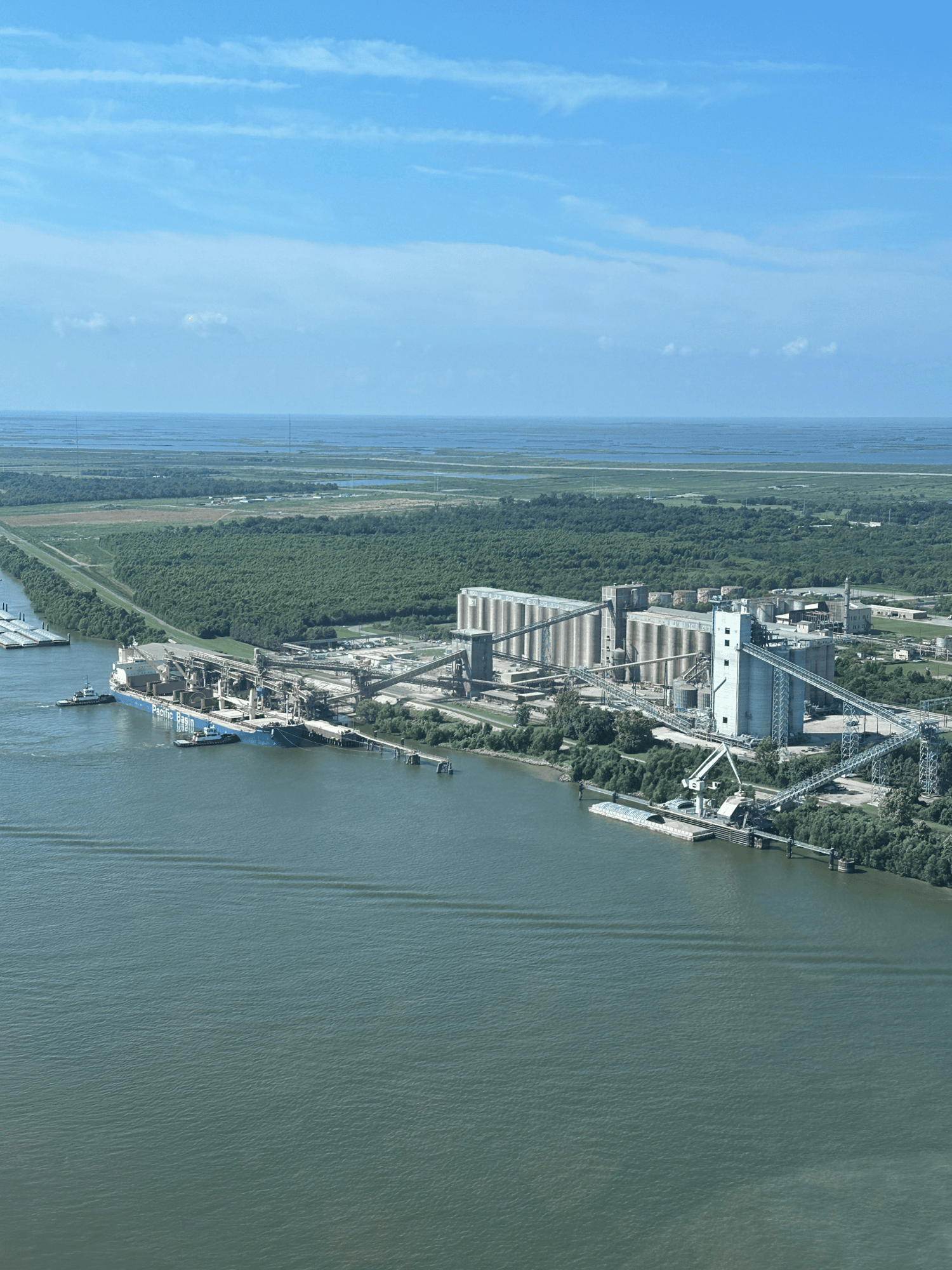
We’re home to multiple major terminals serving a wide variety of sectors.