
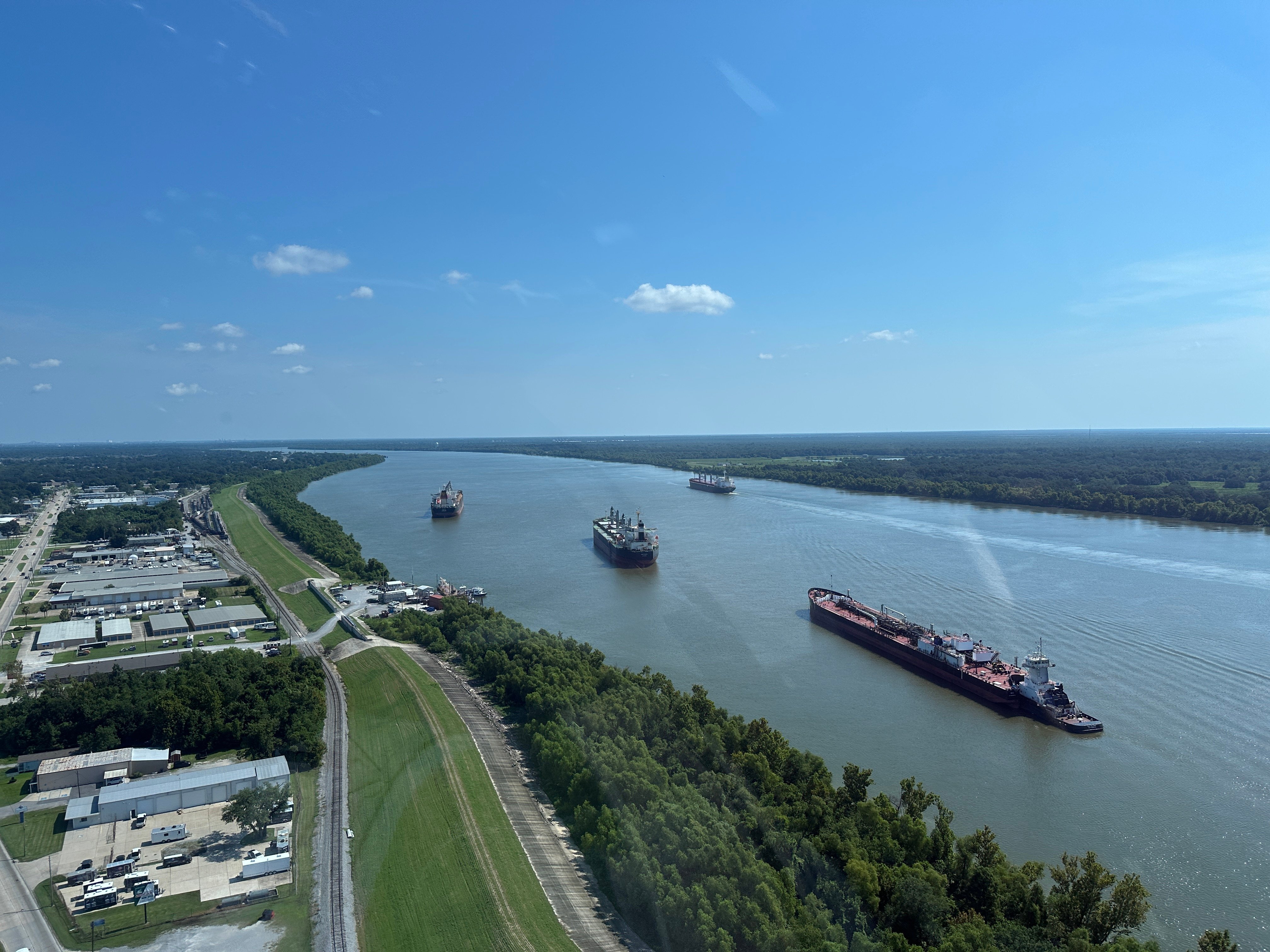
The Port of Plaquemines: America's Gateway to Global Trade
Positioned along the first 81 miles of the Mississippi River from the Gulf of Mexico, the Port of Plaquemines (Louisiana Gateway Port) serves as the nation’s maritime front door. It is the critical fulcrum where deep-draft ocean transit meets North America’s most expansive inland waterway network, translating geographic advantage into a multi-billion-dollar supply chain engine.
Anchor to the World's Largest Port Complex
Plaquemines does not stand alone—it serves as the strategic maritime gateway to the Louisiana Port Complex, recognized as the world's largest port complex by collective physical reach and bulk tonnage.
Stretching along the Lower Mississippi River, this interconnected powerhouse unites five deep-water ports:
- Plaquemines Port Harbor & Terminal District (the vital seaward entrance)
- Port of New Orleans
- St. Bernard Port, Harbor & Terminal District
- Port of South Louisiana
- Port of Greater Baton Rouge
Together, these five ports form an unmatched maritime continuum that moves hundreds of millions of tons of cargo annually. As the initial entrance and southernmost anchor of this 54-mile corridor, Plaquemines is the foundational link that welcomes ocean traffic into this industrial corridor before routing goods across the globe.
Where Ocean Shipping Meets the Inland River System
Every ocean vessel navigating into the Louisiana Port Complex must pass through Plaquemines. The port provides navigational capabilities designed to keep cargo moving without the operational bottlenecks common to older river ports:
- 50-Foot Deep-Draft Access: An authorized 50-foot channel accommodates post-Panamax and large bulk vessels at maximum draft.
- Zero Air-Draft Restrictions: Lacking overhead bridge clearances, the port welcomes the modern global fleet regardless of vessel height.
- 14 Midstream Anchorages: Extensive anchorage capacity allows ships to stage, bunker, lighter, and coordinate transits safely, minimizing demurrage and berth congestion.
These marine capabilities create an efficient direct handoff point between transoceanic vessels and the towboats navigating the interior river system.
The Highway to 33 States
The Mississippi River is more than a commercial boundary—it is an arterial superhighway. Connected to tributaries like the Ohio, Missouri, Illinois, Arkansas, and Tennessee rivers, as well as the Gulf Intracoastal Waterway, this network links the Port of Plaquemines to 33 states across the Midwest, South, and Central Plains.
A single 15-barge river tow carries the dry bulk capacity of more than 1,000 semi-trucks or over 200 railcars, operating at a fraction of the carbon footprint and fuel cost. By serving as the primary coastal gateway for this inland fleet, Plaquemines provides high-volume, low-friction access deep into the continental interior.
Feeding and Fueling Global Markets
The cargo flowing through Plaquemines reflects the economic vitality of the American economy, balancing high-demand export corridors with vital import distribution:
Downriver: Powering American Agriculture and Energy Exports
Roughly 60% of all U.S. grain exports journey down the Mississippi River. Corn, soybeans, wheat, and distillers grains sourced from the Midwest arrive via river barges to enter deep-water elevators and export docks across Plaquemines, heading to buyers across Europe, Asia, and Latin America.
Alongside agriculture, Plaquemines handles essential industrial energy flows—serving as a departure point for liquefied natural gas (LNG), refined petroleum products, coal, and specialty chemicals that power international industry.
Upriver: Feeding Domestic Manufacturing and Infrastructure
River commerce flows both ways. Imported bauxite, iron ore, steel products, aggregates, and fertilizer move inland from Plaquemines into America's industrial heartland. These raw inputs feed manufacturing plants in the Rust Belt, supply building material suppliers in the Mid-South, and replenish the crop nutrients needed across Midwest farmland before the next planting season.
Built for Next-Generation Logistics
As supply chains demand greater resilience, lower emissions, and larger vessel capacity, the strategic value of the lower river continues to rise. With major infrastructure developments—including modern container terminal expansions and specialized clean energy facilities—the Port of Plaquemines is reinforcing its position not merely as a river harbor, but as the premier gateway anchoring the world's largest port complex and connecting America's heartland directly to global trade lanes.